Living Sweeteners: Why these sugars are superior for the optimal functioning of our body
Refined sugar: fuel and nothing else
White sugar is pure glucose. No vitamins. No enzymes. No minerals. It's empty fuel — it spikes insulin, creates a peak, then a crash. The body burns it and keeps nothing.
It's like putting gasoline in an engine without ever changing the oil, filters, or parts. The engine runs — but it wears out. Every dose of refined sugar is a metabolic debt. The body borrows its own minerals (calcium, magnesium, chromium) to metabolize this empty glucose.
The food industry uses over 60 different names to hide sugar: dextrose, maltodextrin, high-fructose corn syrup, invert sugar… The principle is always the same: pure glucose in disguise.
The living sweetener concept
A living sweetener does the opposite of refined sugar. It sweetens AND nourishes. It brings fuel AND the tools to metabolize it. It's the difference between an orange and industrial orange juice — both contain fructose, but one is a living ecosystem and the other is an impoverished liquid.
Our three pillars:
Raw honey — unpasteurized, unfiltered, unheated. Raw honey is a complete food: digestive enzymes (diastase, invertase, glucose oxidase), prebiotics (oligosaccharides), B vitamins, minerals, antioxidants. Pasteurization destroys all of this. The honey you find in supermarkets is golden sugar.
Lucuma — the Peruvian golden fruit. Low-temperature dried and ground to powder. Rich in beta-carotenes, iron, zinc, niacin (B3). Low glycemic index. Caramel-vanilla flavor without any added sugar.
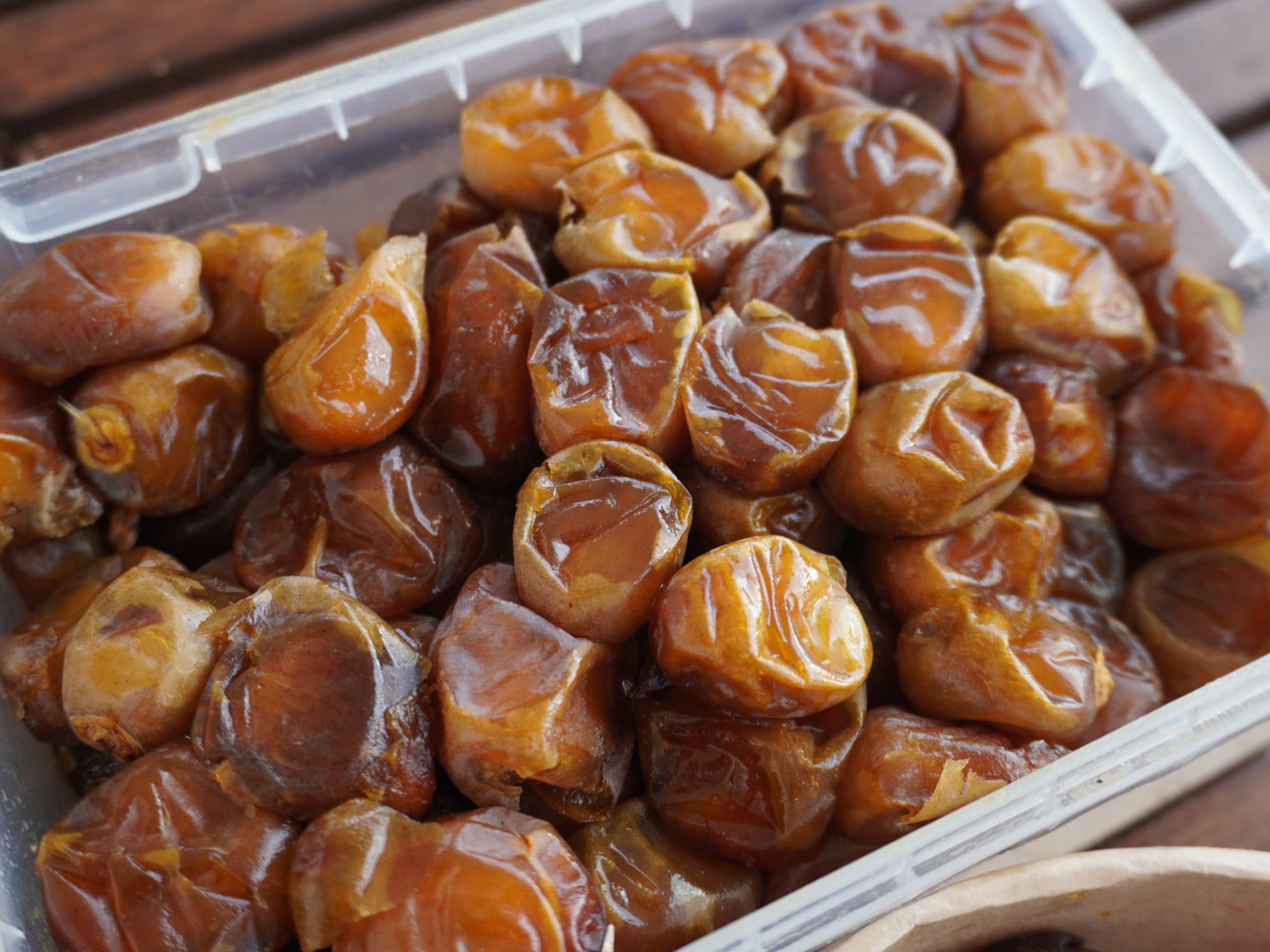
Medjool date — the most nutrient-dense fruit. Potassium, magnesium, copper, manganese, fiber. Each date is a mini-meal. It sweetens our raw chocolate tablets — nothing else needed.
Vibrational scale of sweeteners
UB — Unités Bovis
Our honeys: each flower has its genius
We don't use "honey." We select raw monofloral honeys — each flower imprints its biochemical signature:
Acacia honey — the sweetest, most neutral. Lowest glycemic index of all honeys (~32). Perfect for letting other ingredients express themselves.
Lavender honey — anti-inflammatory, soothing. The Provençal signature. In our Safran & Lucuma bar.
Eucalyptus honey — natural antiseptic, expectorant. Woody, mentholated notes. In our Truffe de Cacao Cru and Matcha & Brahmi.
Linden honey — gentle sedative, anti-stress. For evening and letting go. In our Framboise & Ashwagandha.
Chestnut honey — the most mineral, most full-bodied. Rich in iron and trace elements. The energy ally.
Hautes Corbières honey — polyfloral, harvested by Emma Cowley (Nature & Progrès beekeeper). Bramble, lavender, chestnut, heather — the signature of our terroir. In our Vanille & Spiruline Bleue.
Why the body prefers living sweeteners
It's a question of metabolic coherence. When the body receives glucose accompanied by enzymes, fiber, minerals and vitamins — it knows exactly what to do with it. Absorption is progressive. Insulin stays stable. Energy lasts.
When it receives glucose alone — it's an emergency. Insulin spike. Fat storage. Crash. Craving. Repeat.
As I write in my Full Power article: the quality of our energy — and therefore our consciousness — depends on what we give our cells. A living sweetener nourishes the entire ecosystem. Refined sugar plunders it.
The sensation is immediate. Taste one of our tablets sweetened solely with date and lucuma. The body doesn't ask for "more." It says "thank you." That's the difference between nourishing and filling.